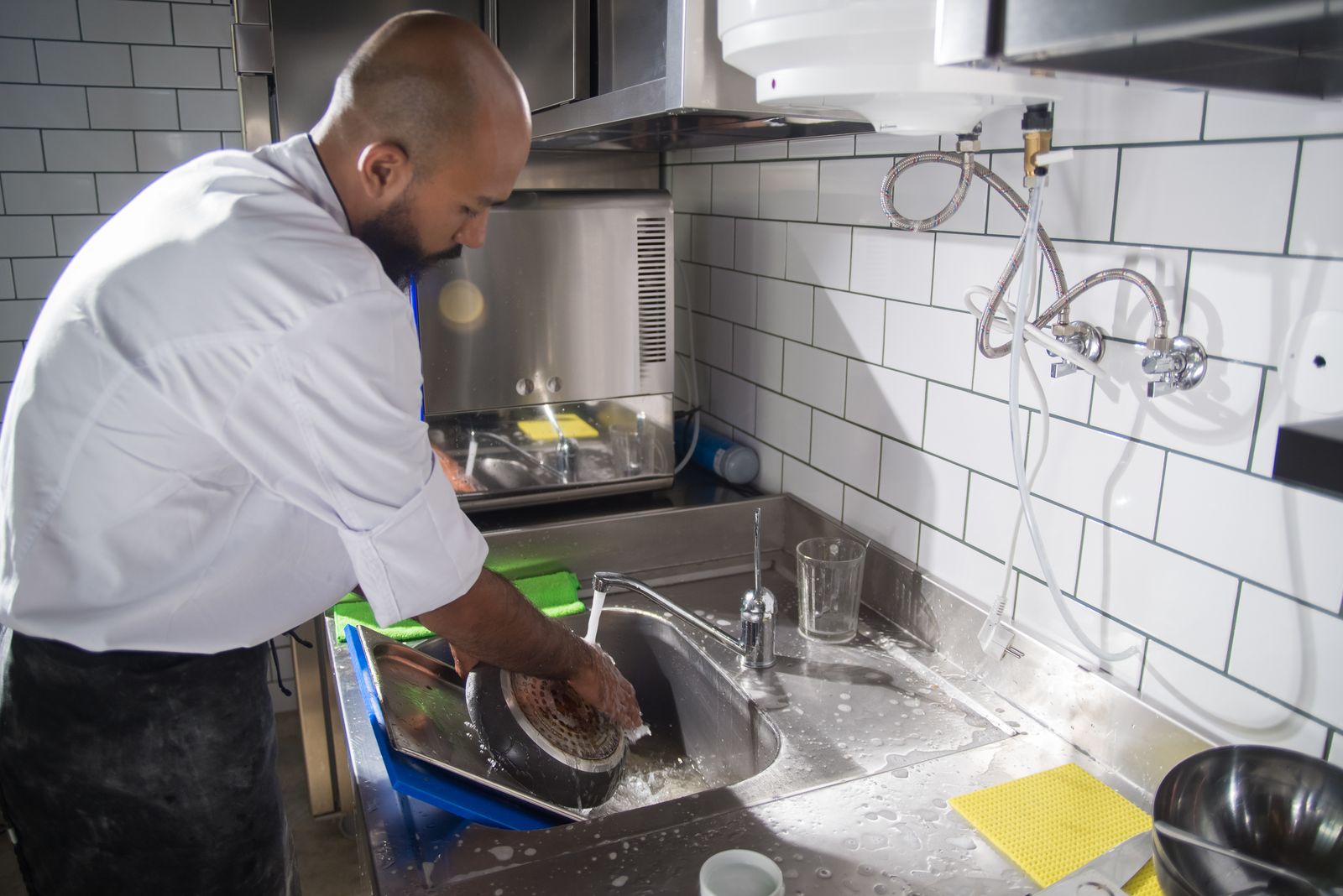
Your food hygiene rating is on your door, on the council website and on every delivery app. Cleanliness is one of the three areas an Environmental Health Officer (EHO) scores — alongside food handling and management/records — and it's the one most directly within a cleaning contractor's control. Here's what inspectors look for, where kitchens typically fall down, and how a proper commercial kitchen cleaning schedule keeps you at a 5.
What the "cleanliness and condition" score covers
EHOs assess the physical condition and cleanliness of the premises: structure, layout, lighting, ventilation, pest control, hand-washing facilities and, crucially, how clean everything is — not just the surfaces you can see, but the ones you can't.
Where kitchens most often lose marks
- Extraction canopies and filters. Grease-laden filters and canopies are a fire risk and a red flag. Filters should be degreased weekly in a busy kitchen; canopies deep cleaned quarterly.
- Behind and under equipment. Fryers, ranges and fridges are rarely pulled out. Inspectors look, and they find grease, food debris and pest evidence.
- Floor-to-wall junctions, grout and drains. Cracked grout, dirty gullies and greasy floor edges harbour bacteria and attract pests.
- Hand-contact points. Fridge handles, tap handles, door push-plates and switches.
- Fridge and freezer seals and shelves. Mould on seals is an easy spot.
- Wall tiles, ceilings and light diffusers. Grease film and dust above head height.
- Cleaning equipment itself. Dirty mops, buckets and cloths, or no colour-coding to separate raw, cooked and toilet areas.
- No documented schedule. The management score suffers if you can't show a cleaning schedule and evidence it's being followed.
A commercial kitchen cleaning schedule that works
After every service
Prep surfaces, chopping boards, sinks, hob tops, pass and servery sanitised; floors swept and degreased; bins emptied and cleaned; hand-contact points wiped.
Weekly
Canopy filters degreased; fridges and freezers wiped inside including seals; walls and splashbacks washed; shelving and racking cleaned; drains flushed and cleaned; floor edges and under-equipment areas cleaned where accessible.
Monthly
Movable equipment pulled out and cleaned behind; ovens, grills and salamanders deep cleaned; dry stores emptied and cleaned; ceiling tiles and light diffusers wiped.
Quarterly / six-monthly deep clean
Full kitchen deep clean: canopies and accessible ductwork degreased, all equipment moved and cleaned, walls, ceilings and tiles degreased, grout and sealant scrubbed, cold rooms emptied and sanitised, drains and gullies cleaned, with a photographic completion report for your due-diligence file.
Outsourcing vs in-house
Kitchen staff can and should handle after-service cleaning. Weekly, monthly and deep-clean tasks are where an external contractor pays for itself: they're done properly, consistently and when the kitchen is closed, and they don't rely on a tired brigade at midnight. For Manchester restaurants, cafés and takeaways we provide scheduled restaurant and commercial kitchen cleaning with the documentation your inspector expects — and we prioritise pre-inspection and re-inspection deep cleans.
About the author: this article was written by the team at Danitam Multi Resource Cleaning Services, professional cleaners based in Wythenshawe, Manchester, providing domestic, commercial and specialist cleaning across Greater Manchester. Guide prices are correct at the time of publication and are reviewed regularly.