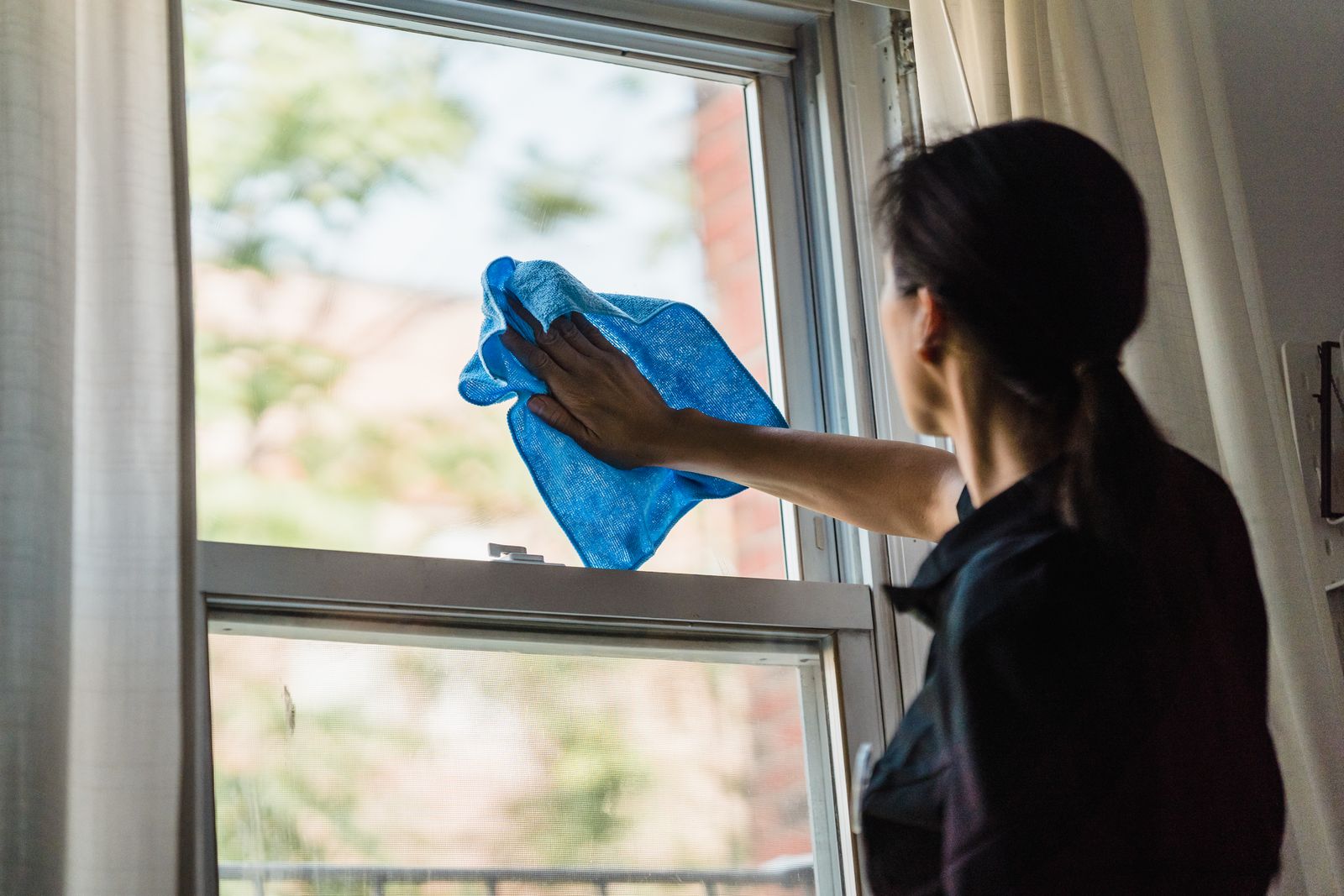
If you've had window cleaners before, you may have noticed some use a bucket, applicator and squeegee while others use a long pole with a brush and a hose. Both can produce clean glass. They work very differently, and the difference matters for results, safety and how long your windows stay clean. Here's a straight comparison from our window cleaning team in Manchester.
Traditional window cleaning
Detergent solution is applied with a sleeve, then removed with a rubber squeegee and the edges detailed with a cloth. Upper windows are reached by ladder.
Pros: instant visible result; good for interior glass; skilled cleaners produce an excellent finish.
Cons: ladders on your property (a safety and liability issue); frames and sills often skipped or given a quick wipe; detergent residue attracts dirt so glass re-soils faster; limited reach on high or awkward windows; slower on large properties.
Pure-water reach-and-wash
Tap water is filtered — through reverse osmosis and de-ionising resin — until it has zero dissolved solids. It's fed through a carbon-fibre pole to a soft brush that scrubs the glass and frames, then the glass is rinsed with pure water and left to dry naturally.
Pros: no ladders — safer for the cleaner and your property; frames, sills and doors cleaned every time as part of the process; no detergent, so no residue and slower re-soiling; reaches third-floor windows, conservatory roofs and skylights from the ground; cleans uPVC frames noticeably brighter; faster on most properties.
Cons: glass looks wet for a few minutes after cleaning (people occasionally worry it hasn't been done); very heavy first cleans may need two passes; not suitable for interior glass.
Why does pure water dry spot-free?
Spots and streaks on glass are minerals left behind when ordinary water evaporates. Pure water contains no minerals — nothing is left to dry. It's also slightly "hungry": with nothing dissolved in it, it actively lifts dirt from the surface.
Which should you choose?
- Exterior windows on any home or business: pure water, for safety, frames and longevity.
- Interior glass, mirrors, partitions: traditional squeegee — which is what we use inside.
- Very high or awkward glazing: pure water, with access equipment above three storeys.
- Heavily neglected glass: pure water first clean, possibly with a traditional finish on ground-floor panes.
Cost
Pure-water systems are a significant investment for the cleaner, but the method is faster and safer, so prices are similar — our residential rounds start from £15 per visit for a typical semi. See how often windows should be cleaned or get a fixed price for window cleaning in Manchester.
About the author: this article was written by the team at Danitam Multi Resource Cleaning Services, professional cleaners based in Wythenshawe, Manchester, providing domestic, commercial and specialist cleaning across Greater Manchester. Guide prices are correct at the time of publication and are reviewed regularly.