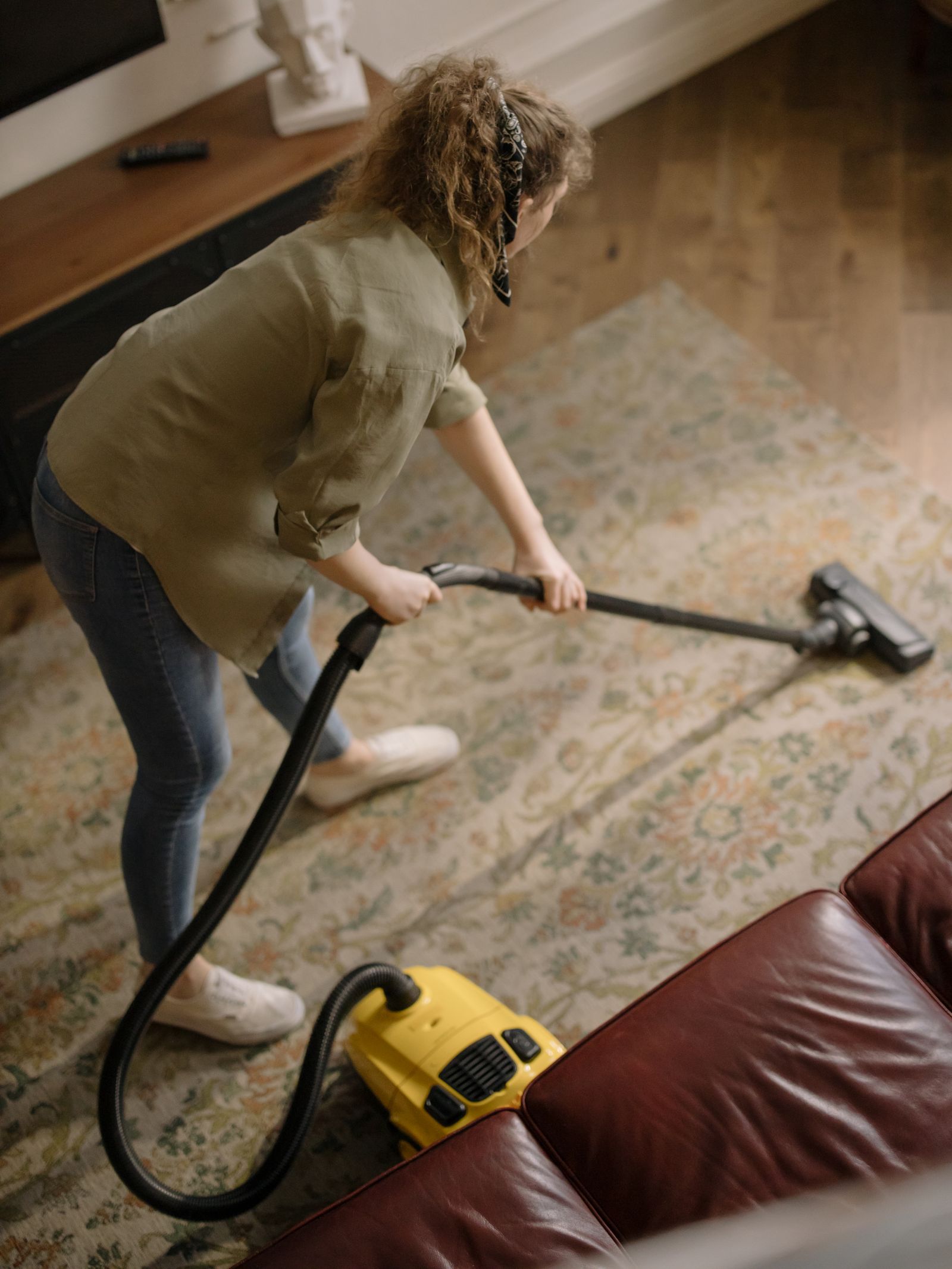
A sofa is usually the most-used and least-cleaned item in the house. It collects skin oils, food, drink, pet hair and dust, and fabric gradually dulls and starts to smell. Here's how to look after upholstery yourself, what to do about stains, and when it's worth calling for professional sofa and upholstery cleaning.
Step one: find the cleaning code
Look under the cushions or on the frame for a small label with a letter:
- W — water-based cleaning is fine. Most modern fabric sofas.
- S — solvent only; water can leave rings or shrink the fabric. Needs professional dry cleaning methods.
- W/S — either method, with care.
- X — vacuum only. Don't use liquids at all.
No label? Test any product on a hidden area (the back or under a cushion) and wait for it to dry before judging.
Routine care at home
- Vacuum weekly with the upholstery tool, including under and between cushions and along seams
- Rotate and plump cushions so wear is even
- Keep sofas out of direct sunlight to slow fading
- Blot spills immediately with a clean white cloth — never rub, which spreads the stain and damages fibres
- Brush leather and suede with the appropriate soft brush; use a leather conditioner twice a year
Common stains (W-coded fabric)
- Tea, coffee, juice: blot, then dab with cool water and a drop of washing-up liquid; blot dry.
- Red wine: blot, sprinkle salt to draw out liquid, then cool water and mild detergent.
- Grease and food: scrape solids, sprinkle bicarbonate of soda, leave 20 minutes, vacuum, then treat with diluted washing-up liquid.
- Pet accidents: blot, treat with an enzyme cleaner (not ammonia-based — it smells like urine to pets), rinse and blot.
- Ink and make-up: often need solvent — this is where professionals earn their fee.
Always use as little liquid as possible. Over-wetting causes water marks, shrinkage and a musty smell as the foam dries slowly.
When to call a professional
- The sofa is S- or X-coded, or you're not sure
- General greying or dullness across the whole piece — that's ground-in soil that needs extraction
- Odours (pets, smoke, damp) that don't lift with airing
- Stains that have set or that home treatment has spread
- Allergies or asthma — hot-water extraction removes dust mites and allergens that vacuuming leaves behind
- Before selling, letting or after buying a second-hand sofa
What professional upholstery cleaning involves
We vacuum thoroughly, test the fabric, pre-treat stains and soiled areas, then use hot-water extraction (or a low-moisture method for delicate fabrics) with upholstery tools that inject cleaning solution and immediately recover it — so the sofa is cleaned deep into the fibres but dries in 3–5 hours. Guide prices from £45 for a two-seater and £60 for a three-seater; see our carpet and upholstery price guide or book sofa cleaning in Manchester.
About the author: this article was written by the team at Danitam Multi Resource Cleaning Services, professional cleaners based in Wythenshawe, Manchester, providing domestic, commercial and specialist cleaning across Greater Manchester. Guide prices are correct at the time of publication and are reviewed regularly.